How a sheet is made
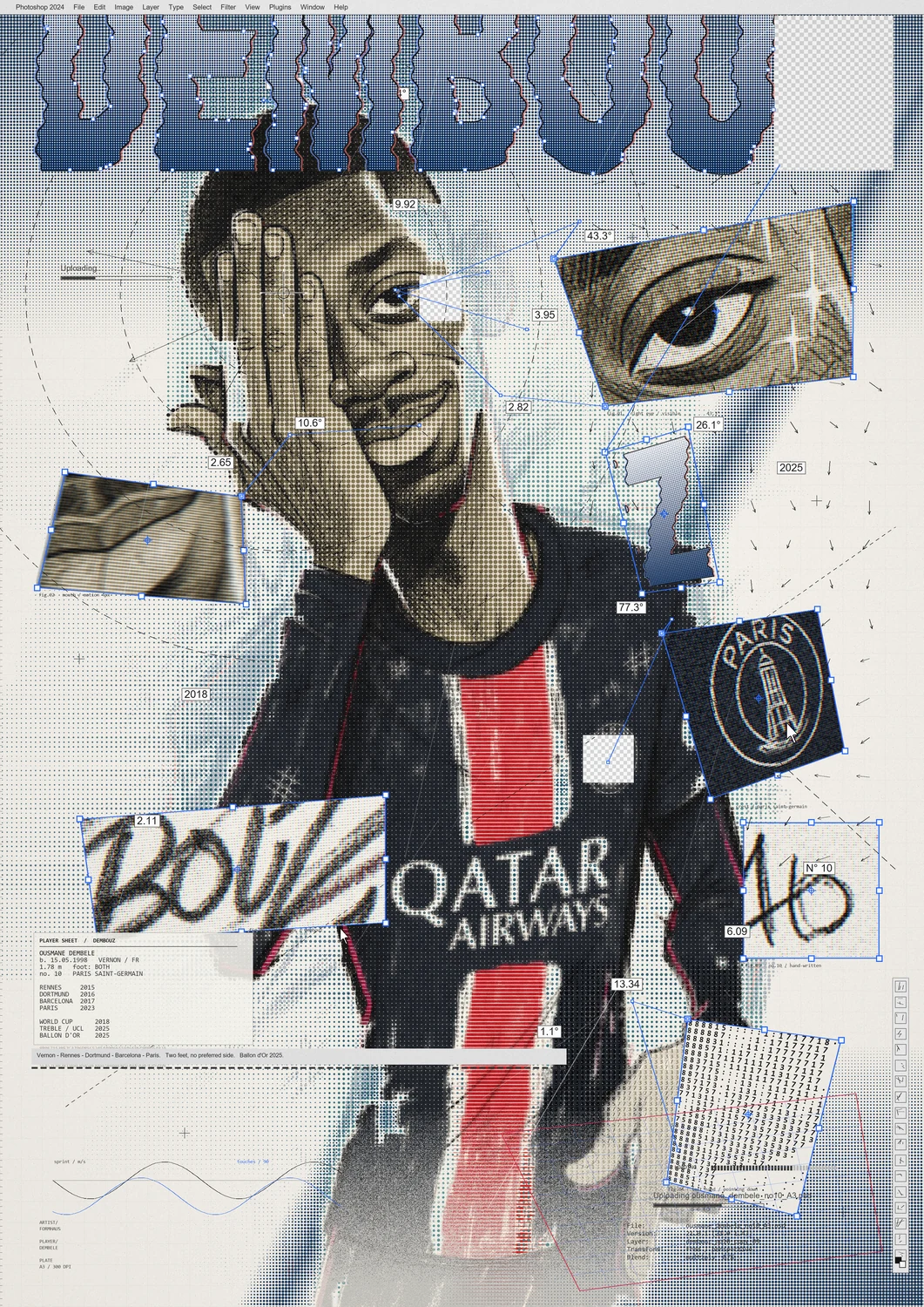
fig.01 · DEMBOUZ · 5 layers
Five layers, top to bottom. Click one to see it. Every picture here is a real file from the pipeline, not an illustration of one.
- #884746
- #29303B
- #7F8EA0
In order
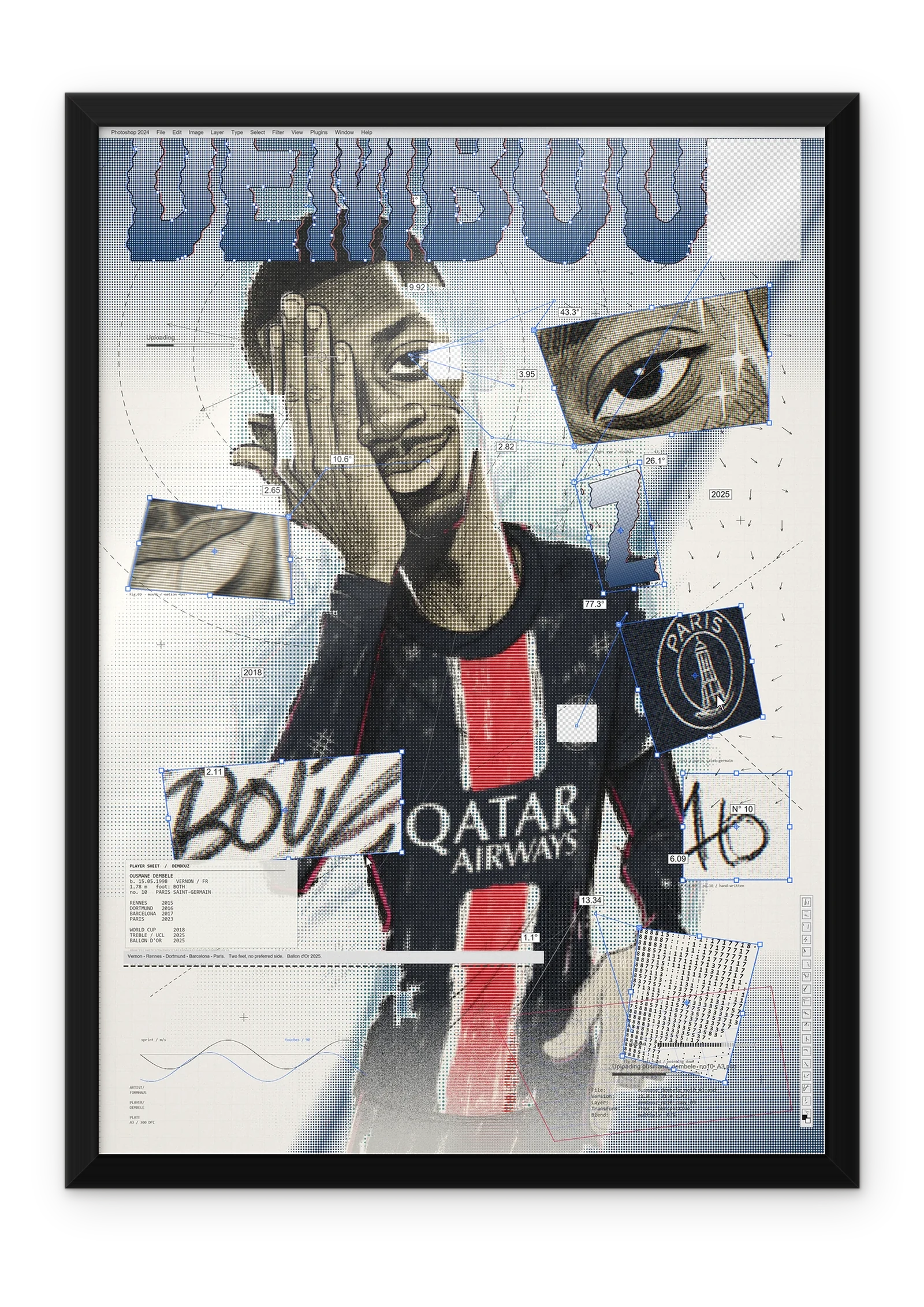
Print and frame
Pigment ink on heavy semi-glossy stock, so the paper tone and the screen survive the print. Rolled in a tube, or behind glass in a black metal frame.
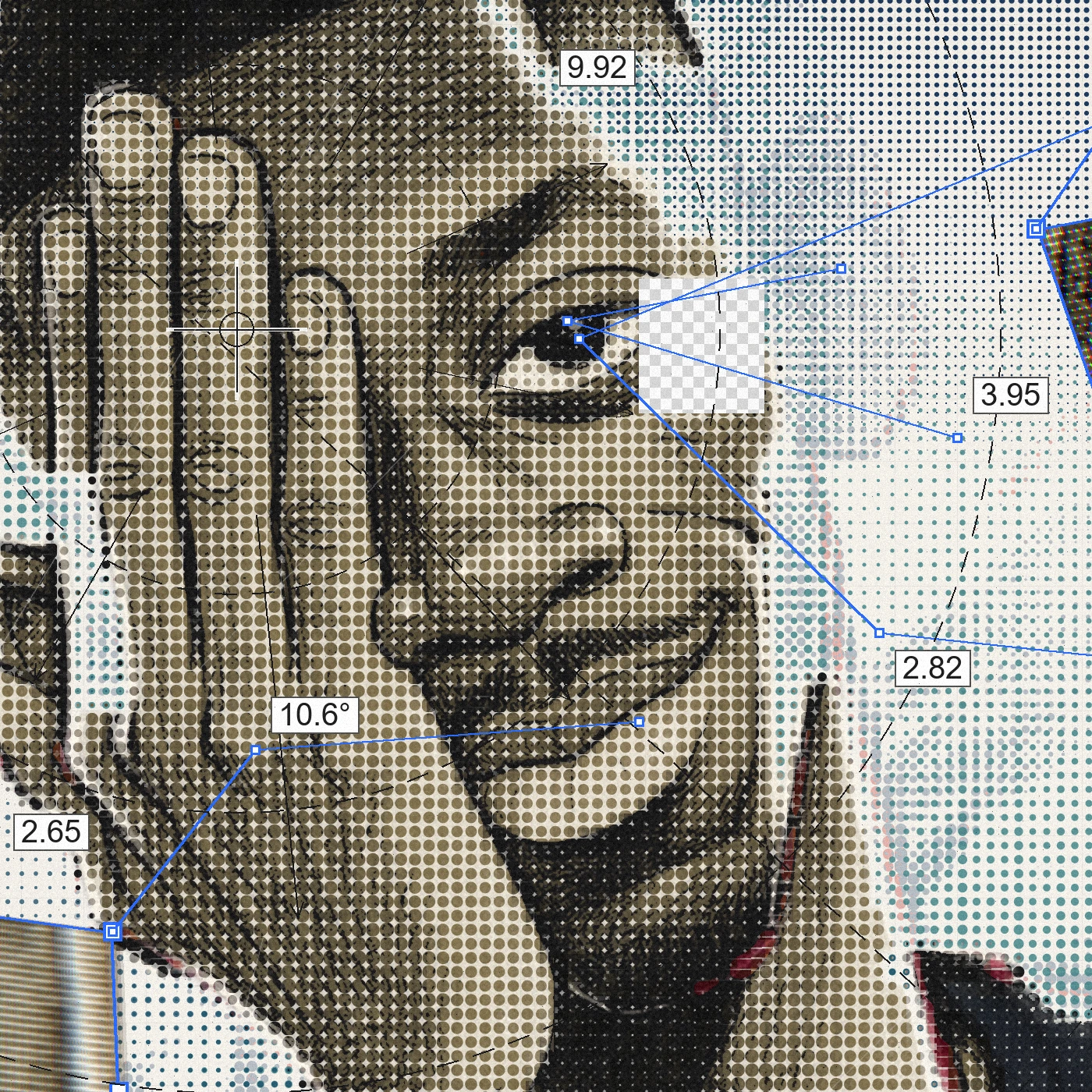
Paper and grain, 1:1
A crop straight out of the file that goes to press. 300 dpi, nothing sharpened, nothing upscaled. This is what the dots look like from thirty centimetres.
Lettering and apparatus
One word, cut off at the top edge, printed like material rather than typed on top. Around it the interface the sheet was made in: transform frames, callouts, the player datasheet. Every number is measured on the sheet.
Palette, measured
No colour table is kept. The sheet is reduced to its strongest flat colours, scored by area times saturation. The three that win are the three you see here. Almost everything else on the sheet is paper and ink.
Sheet, screened
A3 at 300 dpi. The photograph is taken apart and put back through a coarse halftone screen: one dot per cell, its size measured from the picture. Paper stays visible even in the darkest black.
About
One moment per player. Not a career, not a highlight reel, one frame taken apart by a measuring eye and put back together in print.
Warm paper, never white. Ink, never black. A coarse halftone screen you can see the dots of. The interface the sheet was made in stays on the sheet: transform frames, callouts, a player datasheet, a word running off the top edge. Every number on it is measured, not typed.
It starts as a rough on an A3 canvas at 300 dpi and gets finished layer by layer until the screen sits right. Then it goes to press on heavy semi-glossy stock, so the paper tone and the dots survive the print instead of sinking into it.